
 ENG
ENG  ESP
ESP 

Glaucoma is known as "the silent thief of sight," and that's no exaggeration. This eye disease can progress for years without causing pain, noticeable symptoms, or obvious changes in vision... until the damage is irreversible.
Imagine this scene for a moment: you're reading, working, or simply checking your phone, and everything seems normal. But meanwhile, your optic nerve could be slowly deteriorating due to elevated eye pressure that you don't even feel. By the time glaucoma finally shows clear signs, vision loss has already begun.
The good news: detecting glaucoma in its early stages makes a huge difference. Today, modern treatments exist that can slow its progression and preserve vision for decades. This article will guide you in recognizing the early signs, understanding the types of glaucoma, and learning about the most effective current solutions.
Get ready for a complete, clear and practical guide.
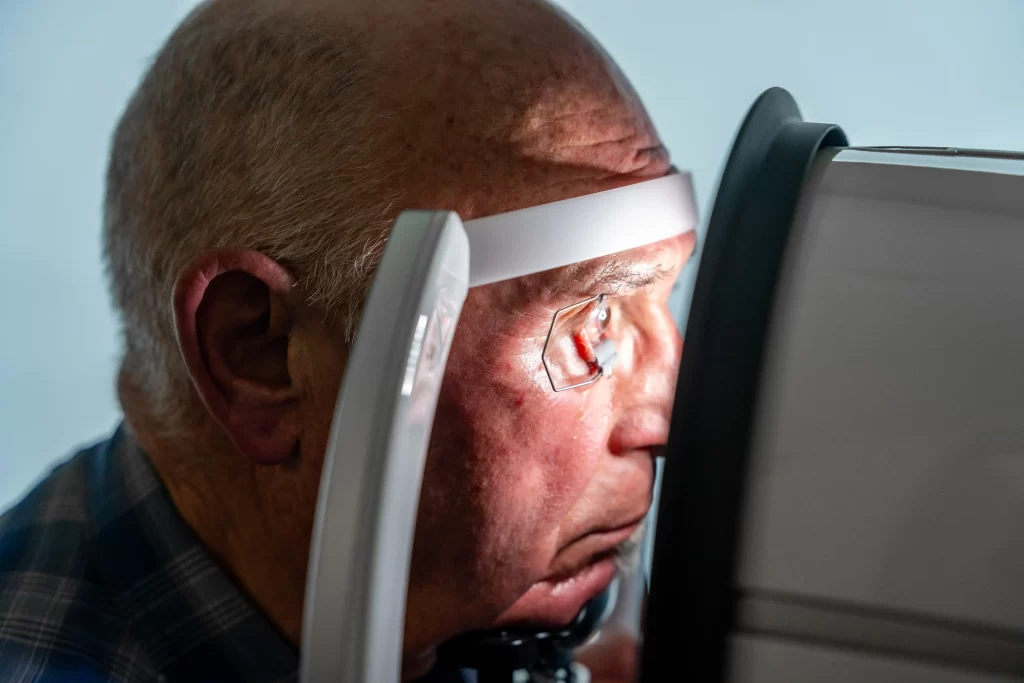
What is glaucoma and why is it so dangerous in its early stages?
Glaucoma is a group of diseases that damage the optic nerve, usually due to an increase in pressure inside the eye, known as intraocular pressure o presión ocular. Este daño es progresivo y, si no se controla, puede provocar pérdida visual permanente.
Why is early glaucoma so difficult to detect?
- It doesn't hurt
- It does not alter central vision at the beginning
- It does not cause redness or discomfort.
- It moves slowly.
- It first affects peripheral vision, an area we don't usually notice immediately.
Es una enfermedad “silenciosa”, pero no inevitable: If detected early, it can be successfully controlled.
Symptoms of glaucoma in its early stages
Although most patients don't experience symptoms in the early stages, there are subtle signs that can serve as warnings. Recognizing them can make the difference between preserving or losing some vision.
1. Slight loss of peripheral vision
The brain compensates for the visual impairment, so it's difficult to notice at first. Some people describe the sensation as:
- “I can see straight ahead, but something strange is happening to the sides.”
- “I have to turn my head more to see certain things.”
2. Mild pain or pressure in the eyes (in some cases)
It doesn't always happen, but in some patients elevated eye pressure can cause subtle discomfort.
3. Difficulty adapting to darkness
3. Difficulty adapting to darkness
4. Halos around the lights
An occasional sign of elevated eye pressure.
5. Frequent changes in prescription
If you need to increase your prescription frequently, it could be more than just a refractive problem.
Causes and risk factors that contribute to glaucoma
Glaucoma does not always have a direct cause, but there are factors that increase the risk:
- High eye pressure
- Age over 40 years
- Family history of glaucoma
- High myopia or hyperopia
- Diabetes
- Hypertension
- Prolonged use of steroids
- Previous eye injuries
Even without these factors, glaucoma can develop. That's why annual eye exams are essential.
Types of glaucoma and which is more common at young ages
Knowing the type of glaucoma helps in understanding its behavior and treatment.
Open-angle glaucoma (the most common)
It represents about 80-90% of cases.
Characteristics:
- Slow progression
- Without obvious symptoms
- Silent damage to the optic nerve
- Common in older adults, but also in young people with a family history
Closed-angle glaucoma
Less common, but much more noticeable.
It can cause:
- Intense pain
- Nausea
- Blurred vision
- Red eye
It's a real medical emergency.
Normal pressure glaucoma
The optic nerve is damaged even with normal pressure.
Cause:
- Vascular factors
- Migraines
- Low ocular perfusion
Juvenile glaucoma
It appears before the age of 40 and can progress rapidly if not detected.
Diagnosing glaucoma in its early stages
Early diagnosis is crucial. An ophthalmologist can detect signs invisible to the patient through advanced studies such as:
- Tonometry: measures eye pressure
- Gonioscopy: evaluates the drainage angle
- Paquimetría: mide el grosor corneal
- OCT of the optic nerve: detects damage even before there are symptoms
- Visual field: identifies peripheral loss
A complete examination can be performed in less than an hour and saves vision.
Modern treatments for glaucoma
Today, glaucoma management is more accessible, safe, and effective than ever before. Treatments aim to reduce eye pressure and protect the optic nerve.
1. Eye drops (first-line treatment)
They are the most common method. There are:
- Prostaglandins
- Beta-blockers
- Carbonic anhydrase inhibitors
- Alpha agonists
They work by reducing the production of aqueous humor or improving its drainage.
2. Laser for glaucoma
Ideal in early stages and for patients who want to reduce their use of drops.
Types of lasers:
- SLT (Selective Laser Trabeculoplasty): Opens the natural drainage of the eye.
- Laser iridotomy: For closed-angle glaucoma.
Both are quick and painless procedures.
3. MIGS Surgery (Microsurgery for Glaucoma)
It is the modern revolution in the treatment of glaucoma.
Advantages:
- Minimal incisions
- Rapid recovery
- Fewer complications than traditional surgeries
- It can be combined with cataract surgery
Ideal for patients in early or moderate stages.
4. Filtering surgery (Trabeculectomy or valves)
For advanced cases or when other treatments do not work.
Most frequently asked questions about glaucoma
Can glaucoma be prevented?
Not completely, but the risk can be reduced with annual checkups.
Is glaucoma curable?
There is no cure, but it can be controlled to prevent vision loss.
Can vision lost due to glaucoma be recovered?
No. That's why it's crucial to detect it early.
Is the treatment painful?
Most treatments, including laser, do not cause pain.
Does glaucoma always cause symptoms?
No. Most patients feel nothing until advanced stages.
Early glaucoma does not progress if detected early.
Early-stage glaucoma is a silent disease, but today we have powerful tools to prevent the vision loss that used to be considered inevitable. Recognizing subtle signs, having regular eye exams, and seeking specialized treatment are key steps to protecting your vision.
If you notice changes in your peripheral vision, discomfort, halos, or you simply haven't had a check-up in years, now is the ideal time to take action.


