
 ENG
ENG  ESP
ESP 

Sight is one of the most valuable senses we have... but also one of the most neglected. Many people spend months—even years—ignoring small visual discomforts that, over time, become more serious problems.
If lately you have found yourself squinting, holding your phone away, or feeling visual fatigue at the end of the day, you might be facing early signs that you need glasses.
This article is designed to help you identify how to know if you need glasses, what are the warning signs, when is the right time to go to the ophthalmologist and which vision tests are the most recommended to detect changes in your visual health.
Get ready: your vision might be telling you something... and today you'll learn to listen to it.
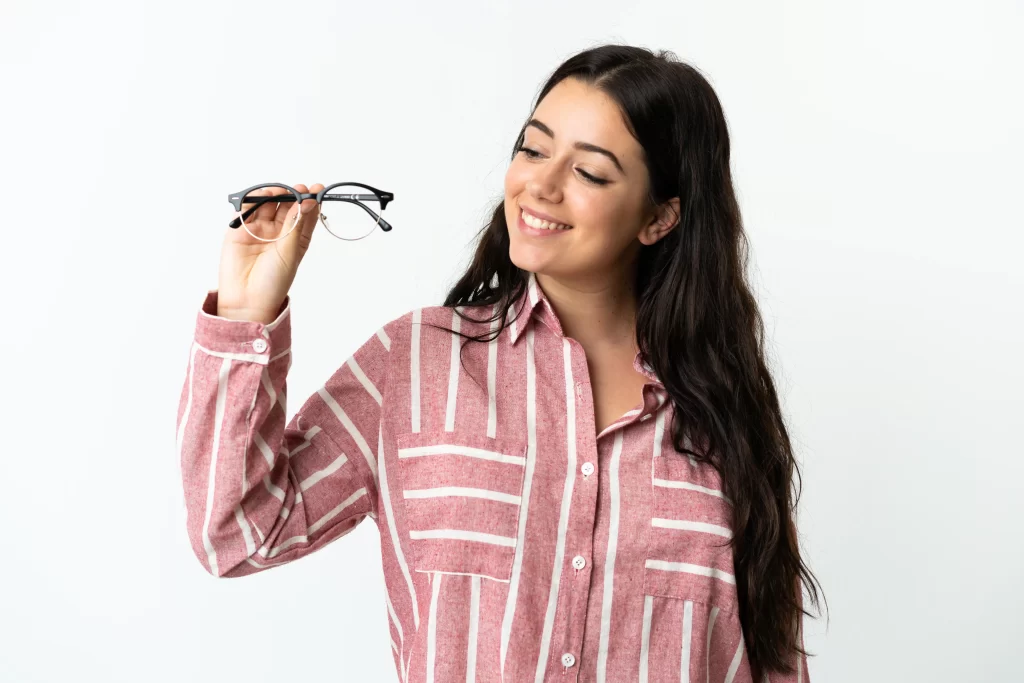
Early Signs That You Need Glasses
Detecting changes in your vision in a timely manner is key to avoiding greater discomfort. Here you will find the most common —and most ignored— signs that indicate you might need glasses.
1. Frequent headaches, especially at the end of the day
One of the most common symptoms.
Visual strain headaches usually appear on the forehead or around the eyes. If it happens after spending hours in front of screens, reading, or driving, it is very likely that your eyes are working too hard to focus.
2. Blurred vision up close or far away
Blurred vision doesn't always mean a serious problem, but it is a clear sign that something is changing.
It can present itself as:
- Difficulty reading small letters.
- Problems distinguishing faces or signals from a distance.
- Or the feeling that "something is out of focus."
This is one of the most direct signs that you might need prescription glasses.
3. You need more light to see or read.
If lately you feel that you need more powerful lamps or to move the book to a more illuminated place, it could be an early sign of presbyopia (farsightedness) or a refractive defect.
4. Squinting to see better
The classic "squinting."
This tightens the eye muscles to temporarily improve focus, but it can worsen symptoms and cause headaches.
5. Eye strain or visual fatigue
Visual fatigue occurs when the eyes are overworked. It may include:
- Itching or burning
- Red eyes
- Tearing
- Sandy sensation
If it occurs frequently, especially during prolonged screen use, it is a strong warning sign.
6. Difficulty adjusting vision between distances
If you go from looking at your phone to looking at something far away and notice a delay in focus, you might need glasses to correct an accommodation problem or astigmatism.
7. Halos or light sensitivity
Seeing halos around lights, being easily dazzled, or feeling eye pain in response to bright lights can indicate refractive errors that require optical correction.
8. Pain or burning sensation after using digital devices
Computer vision syndrome is becoming increasingly common. If after working on a computer your eyes "burn" or feel very dry, you might need a special prescription for screens.
How to Know if You Need to See an Ophthalmologist?
The key question: When is it time to schedule a professional consultation?
Here are the situations you should not ignore:
When to see a specialist without waiting any longer
- You have persistent blurry vision, even if it's mild.
- Headaches have become a regular occurrence.
- You feel discomfort when reading or using screens.
- You notice changes in your nite vision.
- The symptoms appear suddenly.
- More than 12 months have passed since your last check-up (or 6 if you wear glasses).
Why is it important to get checked even if "you see well"?
Because visual problems progress slowly and your brain adapts, making you believe that "it's normal."
A timely examination can prevent major problems such as:
- Rapid increase in your graduation
- Chronic dry eye
- Focus problems
- Severe visual fatigue
- Even silent ophthalmic diseases
Going to the ophthalmologist is an investment in quality of life, comfort, and prevention.
Recommended Vision Tests to Determine if You Need Glasses
To have a complete evaluation, the specialist can perform several tests. Here are the most commonly used ones and what they are for.
Visual acuity test
It is the most well-known: reading letters of different sizes on a card.
It allows you to measure how clear your vision is at different distances.
Eye refraction (to determine the prescription)
The optometrist tests different lenses to identify if you suffer from:
- Myopia
- Hyperopia
- Astigmatism
- Presbyopia
This test determines whether you really need glasses and what prescription will be appropriate.
Eye movement examination
It is used to evaluate how your eyes work together and to detect focusing problems.
Measurement of intraocular pressure
Helps to rule out diseases like glaucoma, which can progress without symptoms.
Fundus examination
It allows observation of the retina, the optic nerve, and the blood vessels.
It is crucial for detecting visual diseases and complications in people with diabetes or hypertension.
Binocular vision test
Determine if both eyes are working together correctly.
Problems here can cause double vision, fatigue, or difficulty reading.
Can I Know if I Need Glasses Without Professional Tests?
Although a self-assessment can give you clues, only a specialist can confirm if you need glasses.
However, you can use these practical indicators:
Signs that alone justify a review
- You can't read small texts at first glance.
- Your eyes get tired quickly when driving at nite.
- You find it difficult to distinguish faces or license plates from a distance.
- Your eyes feel dry or irritated after using screens.
- Your vision changes depending on the lighting.
If you identified with 2 o más, it is very likely that you need glasses.
Tips for Taking Care of Your Eyes While Deciding to Get Checked
While you schedule your appointment, you can apply these habits to protect your vision:
- Follow the rule 20-20-20: every 20 minutes, look at something 20 feet (6 meters) away for 20 seconds.
- Adjust the brightness of your screens.
- Maintain an appropriate distance from the cell phone and computer.
- Use artificial tears if you suffer from dry eye.
- Ensure good lighting for reading or working.
- Get enough sleep: your eyes need rest too.
These habits do not replace glasses, but they do reduce daily discomfort.
Identifying in Time Can Change Everything
Having good vision is not just about seeing clearly; it's about live with comfort, security, and well-being.
If you have noticed any of the mentioned symptoms, your body is already sending you signals. Listening to them in time can prevent headaches, visual fatigue, and more serious problems.
The best way to know if you need glasses is to have a complete eye exam. A specialist will evaluate your situation, give you an accurate diagnosis, and recommend the ideal prescription for you.


