
 ENG
ENG  ESP
ESP 
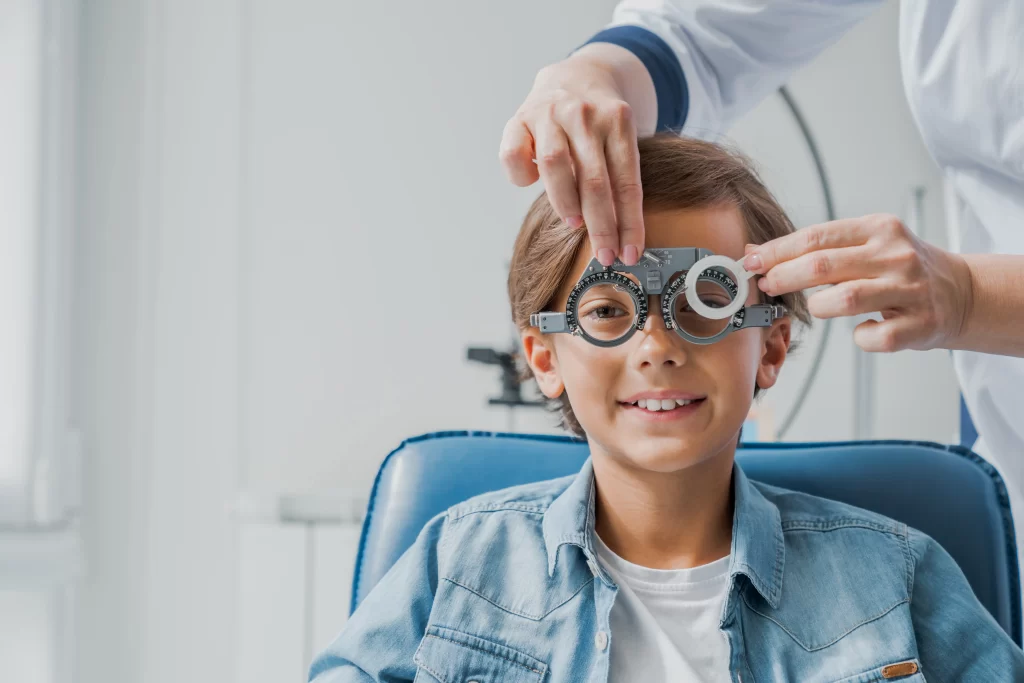
Imagine that your child is at school. The teacher writes on the board and he squints his eyes to try to read. He doesn't say anything. Copies what he can. He gets distracted. His performance drops. You think it might be a lack of concentration... but it could be something much simpler: they aren't seeing well.
Child visual health often goes unnoticed because children do not always know how to explain what is happening to them. For them, seeing blurry can be "normal" if they have never seen clearly.
That's why the ophthalmological examination in children it's not a luxury, it's a necessity. Detecting any visual impairment in time can make a difference in their learning, self-esteem, and development.
In this article, you will discover:
- When to take my child to the ophthalmologist
- At what age is the first eye exam recommended for young children?
- What are the most common childhood visual problems?
- The main signs of poor vision in children
- Why prevention is key
If you are a parent, this information can help you protect one of your child's most important senses: their vision.

When Should I Take My Child to the Ophthalmologist?
One of the most searched questions by parents is: When should I take my child to the ophthalmologist?
The short answer is: before obvious symptoms appear.
General recommendations by age
Although each case is different, these are the most accepted recommendations:
- Newborns: Basic evaluation at birth (performed by the pediatrician).
- Between 6 and 12 months: First preventive eye exam if possible.
- At 3 years old: More comprehensive assessment of visual acuity.
- Before starting school (5–6 years): Key review.
- During the school stage: Check every 1–2 years.
If there is a family history of eye problems, premature birth, or suspicion of visual alterations, it is advisable to go earlier.
The eye examination in children allows for the detection of problems even when there are no visible symptoms.
Why Is Eye Examination So Important in Young Children?
The eye exam for young children it is fundamental because the visual system develops mainly during the first years of life.
Between the ages of 0 and 8, the critical period of visual development occurs. If a problem is not corrected in time, it can permanently affect vision.
Benefits of early diagnosis
- Prevents amblyopia (lazy eye)
- Detects strabismus
- Corrects refractive errors
- Improves academic performance
- Avoids learning difficulties
Many parents associate academic problems with lack of attention, when in reality they may be the result of poor vision.
A simple exam can change everything.
Childhood Visual Problems: Most Common Symptoms
The childhood visual problems they are not always obvious. That's why it's important to recognize the signs.
Most common problems in children
- Myopia: Difficulty seeing far away.
- Hyperopia: Difficulty seeing up close.
- Astigmatism: Distorted vision.
- Strabismus: Eye misalignment.
- Amblyopia (lazy eye): Decreased vision in one eye.
- Recurrent conjunctivitis: Frequent infections.
Early detection is essential, especially in the case of amblyopia, where treatment is most effective if done in childhood.
Signs of Poor Vision in Children You Should Not Ignore
Many parents wonder how to know if something is wrong. These are the main ones. signs of poor vision in children:
Physical signs
- Squinting to focus
- Constantly tilting the head
- Getting too close to the TV or books
- Rubbing your eyes frequently
- Red or watery eyes without an apparent cause
Behavioral changes
- Difficulty concentrating
- Low academic performance
- Frequent headaches
- Avoid reading activities
- Clumsiness when walking or playing
If you identify one or more of these symptoms, don't wait. Schedule a check-up.
What Does an Eye Exam for Children Include?
Many parents feel concerned about what the consultation will be like. The good news is that the eye exam for young children it's simple, painless, and age-appropriate.
Routine evaluations
- Visual acuity test
- Eye alignment assessment
- Eye movement review
- Graduation measurement
- Fundus examination
In young children, playful methods and special boards with figures or drawings are used.
The goal is to create a calm and positive experience.
And If My Child Shows No Symptoms?
Here is one of the most common mistakes: waiting for obvious signs to appear.
Many childhood visual problems they do not cause immediate discomfort. The child's brain can temporarily adapt, masking the problem.
That's why prevention is key.
Even if your child shows no signs of poor vision, an eye exam in children can detect silent alterations.
Impact of Visual Health on Academic Performance
It is estimated that a high percentage of school learning depends on vision.
A child who does not see well may experience:
- Difficulty copying from the board
- Reading problems
- Poor performance in exams
- Demotivation
In many cases, improving vision also enhances confidence and academic performance.
The question is not just when to take my child to the ophthalmologist, but why wait.
Use of Screens and Children's Visual Health
We live in a digital age. Tablets, cell phones, and computers are part of everyday life.
Prolonged use can cause:
- Visual fatigue
- Dry eyes
- Headaches
- Increase in myopia
Practical recommendations:
- Apply the 20-20-20 rule (every 20 minutes, look at something 20 feet away for 20 seconds)
- Limit screen time according to age
- Ensure good lighting
An eye exam in young children helps assess the impact of digital use on their eye health.
Risk Factors Requiring Early Attention
You should arrive earlier than planned if your child:
- He was born premature.
- Has a family history of myopia or glaucoma.
- Presents strabismus
- Ha sufrido traumatismo ocular
In these cases, the ophthalmological examination in children should not be postponed.
Frequently Asked Questions from Parents
At what age is the first eye exam mandatory?
At least one evaluation before the age of 3 and another before starting school is recommended.
Can children wear glasses from a young age?
Yes. If they need it, early use helps correct the problem and prevent complications.
Can childhood myopia worsen?
Yes, especially during growth. That's why regular check-ups are important.
Can a pediatrician detect vision problems?
It can identify basic signs, but a complete diagnosis requires an ophthalmological examination.
How to Prepare Your Child for the Appointment
To ensure the experience is positive:
- Explain to him that they will check his eyes to help him see better.
- Avoid spreading fear
- Make the visit feel natural.
A good experience in childhood promotes preventive care in the future.
Prevention is an Act of Love
Taking care of your child's vision not only improves their ability to see. It protects their development, their learning, and their confidence.
The eye examination in children is a powerful tool to detect problems in time that could affect their quality of life.
Don't wait for signs of poor vision in children to appear. Not all symptoms are obvious.
Today is the Best Time to Act
If you are wondering when to take my child to the ophthalmologist, the answer is clear: before I need it urgently.
The eye exam in young children can make the difference between a correctable problem and a permanent difficulty.
Detecting children's visual problems in time allows:
- Improve academic performance
- Prevent complications
- Protect visual development
- Ensure long-term well-being
Your child deserves to see the world clearly.
Schedule a preventive eye exam and take the first step to care for their visual health. Because when a child sees well, they learn better, play better, and live better.


