
 ENG
ENG  ESP
ESP 
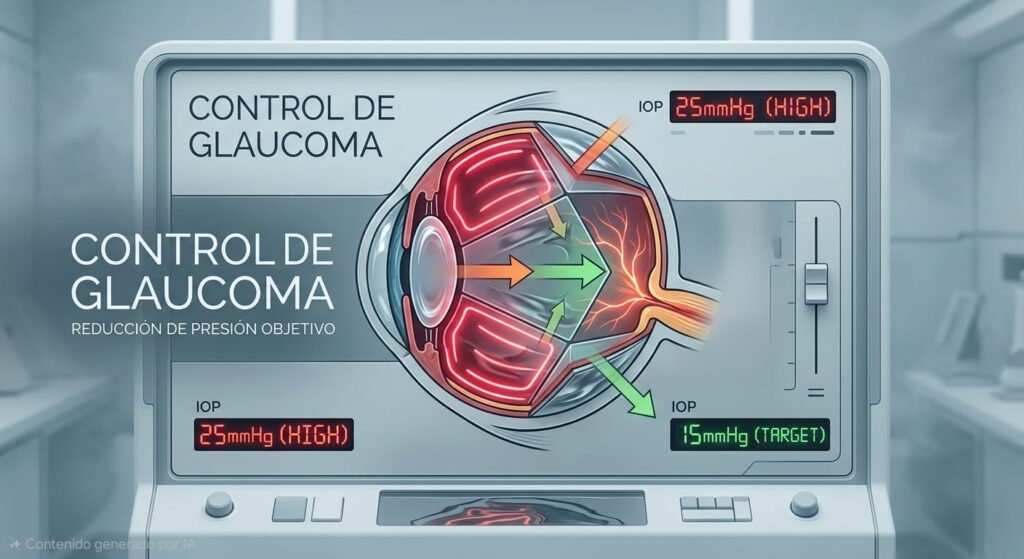
In the world of glaucoma treatment, there isn’t a «one-size-fits-all» solution. If you’ve been diagnosed, you’ve likely heard your specialist mention a specific number: your Target Pressure.
But what does this actually mean? More importantly, why is the doctor-patient dialogue the most important factor in reaching it?
What is «Target Pressure» (Target IOP)? 🎯
Glaucoma is characterized by damage to the optic nerve, often caused by high intraocular pressure (IOP). However, every eye has a different «breaking point.»
Target Pressure is the specific level of eye pressure that your ophthalmologist determines is low enough to prevent further damage to your unique optic nerve. It is a customized goal designed to preserve your vision for the rest of your life.
Why Is My Goal Different From Others? 🩺
A «normal» eye pressure is often cited between 10 and 21 mmHg. However, in glaucoma, «normal» is relative. Your doctor calculates your target based on a variety of personal clinical factors:
| Factor | Why it influences your goal 📋 |
| Existing Damage | If the optic nerve is already fragile, the target must be lower and stricter. |
| Corneal Thickness | Thinner corneas can lead to underestimated pressure readings. |
| Age & Life Expectancy | We aim to protect your functional vision for your entire lifetime. |
| Baseline Pressure | The starting point where damage was first detected. |
The Golden Rule: Target pressure is not a static number—it’s a dynamic goal that can be adjusted as your eye health evolves.
A Partnership: Why the Dialogue Matters 🤝
The most successful glaucoma treatments are built on a partnership. Your doctor provides the clinical expertise, but you provide the «real-world» data. To accurately set and maintain your target pressure, an open dialogue is essential:
- Honesty about Medication: If your eye drops are causing irritation or if you occasionally forget a dose, tell your doctor. They can adjust the strategy or offer alternatives to keep you on target.
- Discussing Lifestyle: Your daily habits and general health (like blood pressure) can influence your eye pressure.
- Sharing Symptoms: Glaucoma is often asymptomatic, but if you notice changes in your peripheral vision or physical discomfort, these are vital clues for your specialist.
Your «Checklist» for the Next Consultation ✍️
To foster this dialogue, try asking your specialist these three questions during your next visit:
- «What is my current target pressure, and why was this specific number chosen for me?»
- «Is my current pressure stable at this target, or do we need to aim lower?»
- «Are my diagnostic tests showing that this target is successfully protecting my optic nerve?»
