
 ENG
ENG  ESP
ESP 
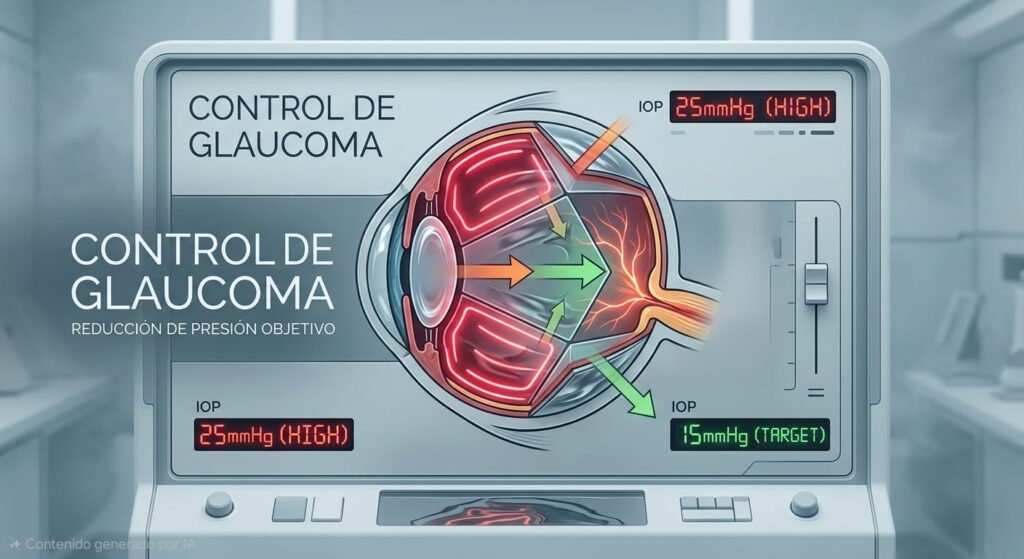
In the world of tratamiento del glaucoma, there is no one-size-fits-all solution. If you've been diagnosed, your specialist has likely mentioned a specific number: your target pressure.
But what does that really mean? And more importantly, why does the doctor-patient conversation Is it the most important factor in achieving it?
¿Qué es la «Presión Objetivo» (PIO Objetivo)?
Glaucoma is characterized by damage to the optic nerve, often caused by a intraocular pressure (IOP) high. However, each eye has a different “breaking point.”
The target pressure is the specific level of intraocular pressure that your ophthalmologist determines is low enough to prevent further damage to you single optic nerve. It is a personalized goal designed to preserve your vision for the rest of your life.
¿Por qué mi meta es distinta a la de los demás?
It is often stated that “normal” eye pressure ranges from 10 to 21 mmHg. However, in glaucoma, “normal” is relative. Your doctor sets your target based on various personal clinical factors:
| Factor | How it affects your goal 📋 |
| Existing Damage | If the optic nerve is already fragile, the goal should be more conservative and strict. |
| Corneal Thickness | Thin corneas can lead to underestimated pressure readings. |
| Age and Life Expectancy | The goal is to protect your functional vision throughout your life. |
| Initial Pressure | The point where the damage was first detected. |
The Golden Rule: Your target blood pressure is not a static number; it is a dynamic goal that can be adjusted as your eye health changes.
Una alianza: Por qué el diálogo es fundamental
The most successful treatments for glaucoma are based on a alianza. Your doctor brings clinical expertise to the table, but you provide the “real-world” data. To accurately set and maintain your target blood pressure, open communication is essential:
- Honesty about medications: If the drops cause irritation or if you occasionally miss a dose, let your doctor know. They can adjust your treatment plan or suggest alternatives to help you stay on track.
- Talking about lifestyle: Your daily habits and your overall health (such as blood pressure) can affect your intraocular pressure.
- Share symptoms: Glaucoma is usually asymptomatic, but if you notice changes in your peripheral vision or physical discomfort, these are vital clues for your eye doctor.
Tu «lista de verificación» para la próxima consulta
To encourage this conversation, try asking your specialist these three questions during your next visit:
- “What is my current target blood pressure, and why was that specific number chosen for me?”
- “Is my current blood pressure stable at that level, or do we need to lower it further?”
- “Do my diagnostic tests show that this treatment is successfully protecting my optic nerve?”
